What Equipment Is LOLER Relevant To? A Duty Holder's Guide
Updated: 12 minutes ago
If you own or run a business with lifting equipment, the hard part is often working out which bits of kit actually fall under LOLER. Get it wrong and you either pay for examinations you do not need, or leave equipment uncovered and risk a problem with the HSE or your insurer. Here is a clear rundown of the equipment LOLER applies to, with the most common examples we examine.

What Equipment Is LOLER Relevant To?
LOLER is relevant to any equipment used at work to lift or lower a load, plus the accessories that go with it. In practice that means forklifts, cranes, MEWPs, scissor lifts, cherry pickers, vehicle lifts, telehandlers and excavators, along with lifting accessories such as slings, chains and eyebolts.
The test is simple. If a piece of equipment lifts or lowers a load at work, and a person could be hurt if it failed, LOLER almost certainly applies. The load can be goods, materials or people.
The Most Common Equipment LOLER Covers
In our experience these are the items that come up again and again on customer sites:
Forklift trucks
Cranes
MEWPs
Scissor lifts
Cherry pickers
Vehicle lifts
Telehandlers
Excavators (when used for lifting)
The list is not exhaustive, but it covers the vast majority of the kit we are called out to. Here is how each one sits under the regulations.

Forklift Trucks
Forklifts are the most common piece of equipment we examine. They lift and lower loads on forks or attachments all day, so they sit squarely under LOLER. Our forklift inspection covers the mast, forks, chains and lifting function.
Cranes
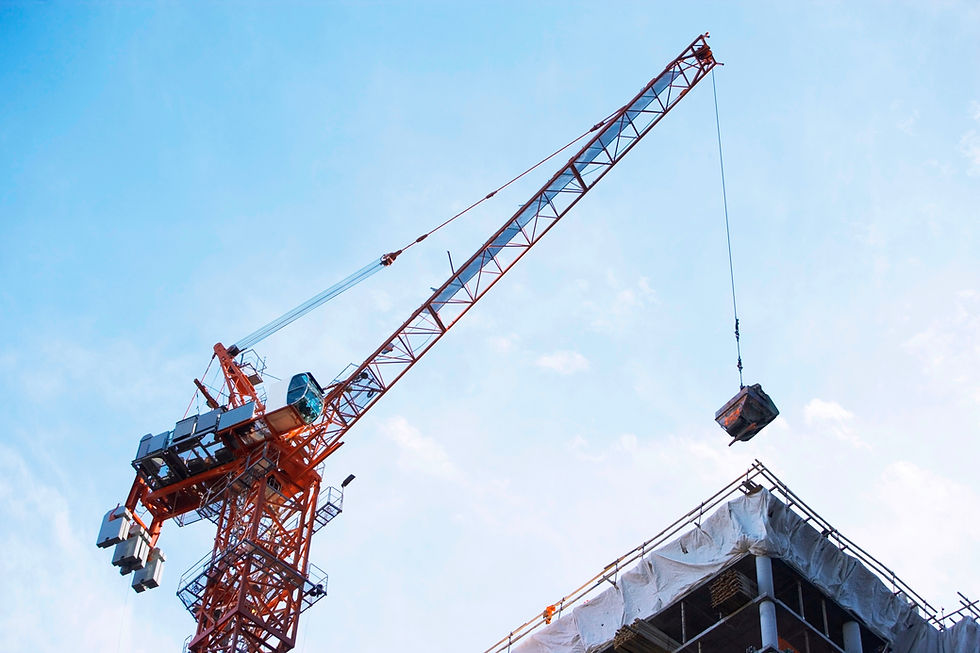
This covers mobile cranes, overhead and gantry cranes, tower cranes and lorry-mounted cranes such as hiabs. All of them lift loads, and all need thorough examination. We carry out crane inspection across a range of types and capacities.

MEWPs
A MEWP is a mobile elevating work platform, and because it lifts people rather than goods it needs examining more often. Scissor lifts and cherry pickers are both types of MEWP. Our MEWP inspection applies to the full range.

Scissor Lifts
A scissor lift raises a platform straight up on a folding, criss-cross frame. As a person-lifting platform, it falls under LOLER and the shorter examination interval. We provide scissor lift inspection for warehouse and access units alike.

Cherry Pickers
A cherry picker is a boom-type platform that reaches up and out, used for tree work, building maintenance and access. Like any people-lifting platform it needs regular examination. Book a cherry picker inspection and we will come to site.

Vehicle Lifts
Two-post and four-post vehicle lifts in garages and workshops raise vehicles so people can work beneath them. That puts them firmly under LOLER, and a failure here is serious. Our vehicle lift inspection is one of the jobs we are asked for most by motor trade businesses.

Telehandlers
Telehandlers combine a forklift's lifting with a boom's reach, which is why they are everywhere on farms and construction sites. The lifting function brings them under LOLER. We handle telehandler inspection for both sectors.

Excavators
An excavator on its own is work equipment, but the moment it is used to lift a load, for example with a lifting eye or quick hitch, the lifting function comes under LOLER. We carry out excavator inspection for plant used in this way.
What Counts as Lifting Equipment Under LOLER?
Under LOLER, lifting equipment is any work equipment used for lifting or lowering loads, including the attachments and accessories used to anchor, fix or support it. So it is not just the machine itself that needs examining, but the slings, chains, hooks and eyebolts that go with it.
The HSE sets this out clearly in its LOLER guidance. The principle is broad on purpose, so businesses cannot sidestep the rules on a technicality.
How Often Does It Need Examining?
The intervals depend on what the equipment lifts. As a rule:
Every 6 months for equipment that lifts people, and for lifting accessories.
Every 12 months for all other lifting equipment.
In line with a written scheme of examination drawn up by a competent person, where one is in place.
This is why MEWPs, scissor lifts and cherry pickers come round twice a year, while a forklift used only for goods is typically annual.
How to Check Whether Your Equipment Is Covered
If you are unsure, ask one question: does it lift or lower a load at work? If the answer is yes, treat it as covered until a competent person tells you otherwise.
Most lifting equipment also counts as work equipment, so it tends to fall under PUWER at the same time. The two sets of rules overlap, and a lot of kit needs both. Getting an accurate picture of your fleet early is the cheapest way to avoid a lapsed examination later, which is the sort of thing an inspector or insurer will spot straight away.


Comments