
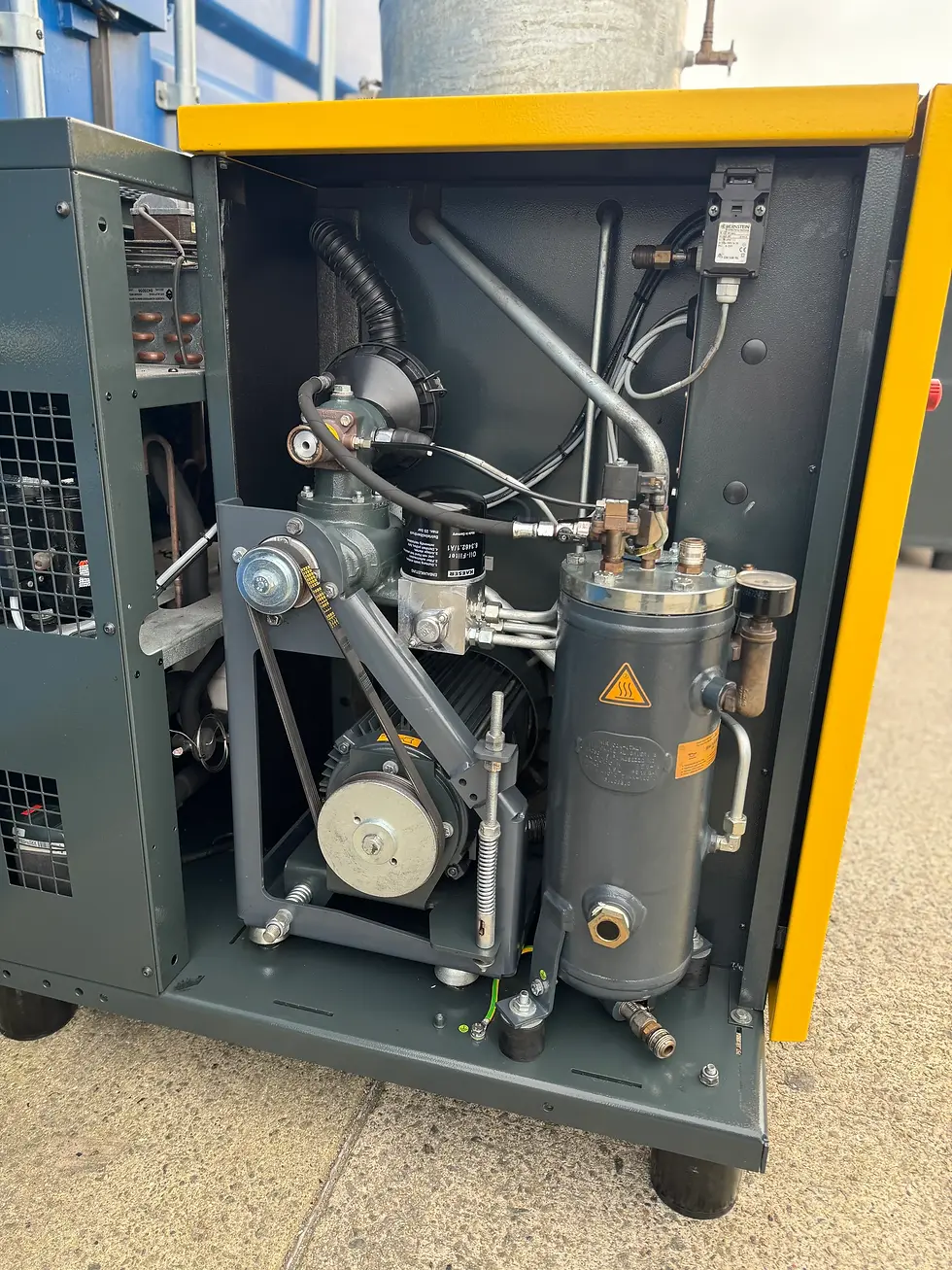



Air Oil Receiver Inspection
Air Oil Receivers Under PSSR
An air oil receiver is the separator vessel on a screw compressor that takes the oil back out of the compressed air. It is a pressure vessel in its own right, so PSSR 2000 requires it to be examined to a Written Scheme of Examination. We assess it inside and out, along with its relief and minimum-pressure valves.
It is part of the compressor system, and protected by a safety valve.
Air Oil Receiver PSSR
Regulation
PSSR 2000
Examined to
Written Scheme
Typical interval
12-48 months
Examined
On site
Report turnaround
Within 3 days

What's included
What's covered in an air oil receiver examination
External Condition
We examine the external condition, corrosion and mountings. External corrosion at the mountings and welds is a common finding.
Internal Condition
We examine the internal condition to the scheme, and the separator element housing on the pressure side, where oil-related deterioration shows up.
Relief and Minimum-Pressure Valves
We check the relief valve and the minimum-pressure valve. A faulty relief or minimum-pressure valve is something we regularly report.
Drain and Scavenge
We check the drain and oil scavenge, and the pressure gauge and connections. Leaking connections are a frequent finding.
Data Plate and Limits
We confirm the data plate and safe operating limits are present and legible. A missing or illegible data plate is a defect we flag.
How it works
Your air oil receiver's PSSR examination, start to finish
Every scheme your equipment is required to meet under UK regulation carried out by accredited engineers and backed by compliant reports.
1
Book
Send the compressor details and your site, and we confirm a date and a fixed price, usually same day.
2
On-site examination
A competent examiner attends and examines the separator vessel inside and out to your scheme.
3
Compliant report
Your examination report arrives within three days, with internal and external findings and defects.
4
Reminders
We keep the scheme's due date and prompt you before the vessel falls due.
OUR STANDARDS
Every vessel given the same scrutiny
We take our responsibilities seriously, upholding the highest standards of professionalism, quality and safety across every aspect of our operations.
Quality Assurance
The separator vessel examined by competent examiners who give it the same scrutiny as any receiver.
Responsibility
A rigorous examination to your Written Scheme that keeps your screw compressor system compliant with PSSR 2000.
Care
The air oil receiver gets overlooked, but it is a pressure vessel, so we treat it as one.
GET IN TOUCH
Request an Air Oil Receiver Examination
Tell us about your screw compressor and timing, and we'll confirm availability and a competitive quote, usually the same day.
Call us
0208 050 3958
Based in
Reading, Berkshire: serving the South of England
● Hampshire
● Oxfordshire
● Northamptonshire
● Cambridgeshire
● Surrey
● Buckinghamshire
● London
FAQ
Common Air Oil Receiver Inspection Questions
How often does an air oil receiver need examining?
At the interval your Written Scheme of Examination specifies, set by a competent person, typically in the 12 to 48 month range for a vessel of this kind. The scheme determines it, not a fixed PSSR figure.
What is an air oil receiver?
It is the separator vessel on a screw compressor that takes oil back out of the compressed air. It is a pressure vessel in its own right, so it falls under PSSR and is examined to your Written Scheme of Examination.
Do I legally need a PSSR examination?
If you operate a pressure system that stores energy - compressed air, steam or refrigeration - PSSR 2000 makes it your duty to have a Written Scheme of Examination and to examine the system to it. Running without one is a criminal offence, and a competent person's report is your evidence of compliance.
What is a Written Scheme of Examination?
It is the document, drawn up by a competent person, that sets out which parts of your pressure system must be examined, how, and how often. PSSR requires one before the system is used. We can write the scheme for you and then carry out the examinations to it.
What happens if something fails the examination?
Your report sets out every defect and how serious it is, with anything dangerous flagged at once so it can be taken out of service until it is put right.